New direction thanks to Matthieu Blazy
Matthieu Blazy’s first collection for Chanel opened to Paris-praise leaving a Star-studded standing ovation.
This has always been Chanel’s universe, but what the world wasn’t ready for was Blazy’s explosive debut at the storied fashion house. With fashion’s game of musical chairs constantly shifting among designers, it’s hard to keep track of who’s-at-where. Notable missteps were present during this fashion cycle — most obvious at Milan Fashion Week, where Dario Vitale debuted a disastrous Versace collection that reminded everyone how Italy could set the bar low yet still raise the stakes of offending global editors in a complete waste of their time. Chanel, however, proved no waste.
Virginie Viard took the helm after Karl Lagerfeld’s 36-year tenure at the house, ushering in a quieter, more subdued Chanel — one lacking the lustrous vision of the Lagerfeld era. Viard, largely absent from the fashion press, became a faint stain among Chanel’s white tweed suits. Be that as it may, filling Lagerfeld’s shoes was perhaps the most daunting task in fashion history a credit still owed to Viard for her 5year attempt.
Matthieu Blazy’s, 41, having led houses such as Maison Martin Margiela and Celine, and worked under visionaries like Raf Simons and Phoebe Philo, arrived at Chanel with immense expectations.
Yet, within seconds of the debut — like a sun rising over the horizon — Chanel was thrust into modernity. The dawn of a new Chanel woman had arrived.
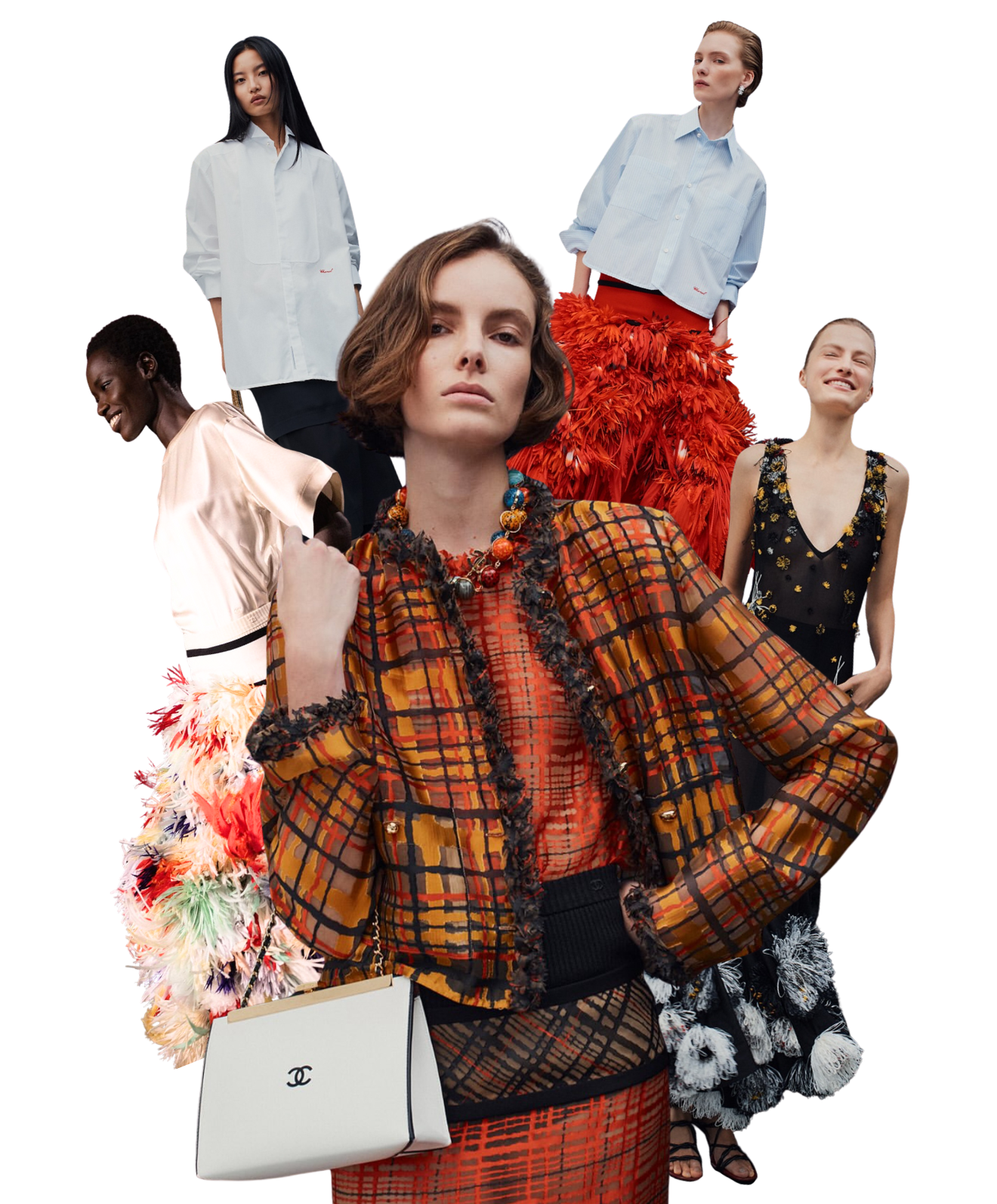
A brown tailored tweed pantsuit, cropped precisely at the waist, sharpened the brand’s “ladies who lunch” image in an instant. The look’s focal point — a crinkled, millimeter Chanel bag with a nonfunctional closure — was a delicious desecration of one of fashion’s most iconic accessories. The nonfunctional bag inserted into the modern image of the new Chanel woman gave the impression that Chanel, once a brand decaying in your grandmother’s closet, had been rediscovered and revived by a new generation.
The looks continued — the classic Chanel suit reappeared, but with exaggerated shoulders. Upon closer inspection, what seemed like tweed was actually an illusion, meticulously crafted entirely from beadwork, making one second-guess whether this was couture and not merely ready-to-wear. The crown jewel of the show was perhaps the reinvention of the classic tailored shirt, paired with a voluminous skirt adorned with handcrafted silk flowers. It elevated the minimal Oxford shirt into a casual couture moment — thirsty for the cover of every magazine.
At first glance, the crisp, impeccably tailored shirt projected a subtle declaration of social status of those who can afford it. However, underneath its hemline lay a small yet revolutionary homage to Gabrielle “Coco” Chanel herself. Along the hem, a Chanel chain-link cord was masterfully tucked and stitched to provide weight — a technique born from Coco’s own mind at the debut of the original tweed Chanel suit in 1954.
H-line skirts and drop-waist, bias-cut dresses floated along the galaxy-paved runway, followed by floral-hatted gowns, oversized-shouldered suits, and concluding with sultry day dresses. One couldn’t help but notice Blazy’s effort to touch on every era of the Chanel archive — from the 1920s, 1980s, and 1990s. One thing was clear: Blazy did his homework.
As creative directors continue to be traded — and some even passed over after lackluster debuts —Blazy’s reinvention of Chanel should serve as the blueprint for reviving a sleepy, tired brand and thrusting it into modern style conversation. The collection also serves as a reminder that Chanel has always been part of the fashion universe — we just needed a smart, modern, and brave thinker to bring it back down to earth. Chanel SS26: A Triumph!