Alumni hosts Q&A session with ACM
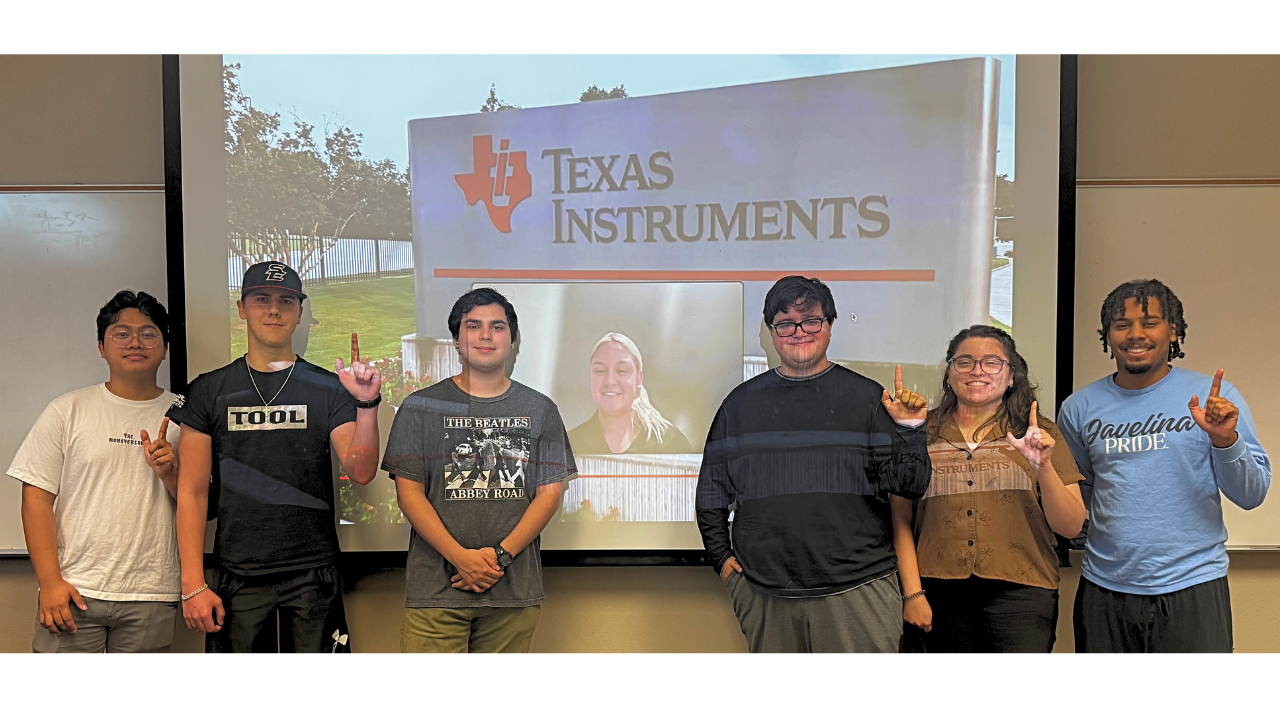
Alumnus, Destiny De La Garza, hosted a Q&A session on Mar. 4, with the student organization, Association for Computing Machinery (ACM) about her job as an IT Automation Engineer at Texas Instruments. Students got the opportunity to ask questions in a welcoming environment from a recent graduate within the same major.
“If I had to go back to my senior year, I wouldn’t have been so hard on myself during job searching, everything works out in the end,” Destiny De La Garza, Computer Science Alumni from TAMUK said.
To help current students navigate these same senior-year anxieties, the ACM club hosted a panel focused on bridging the gap between the classroom and the workforce
“The main goal is to give students a chance to hear directly from someone who was recently in their position and is now working in the industry. Having Alumni speakers help bridge the gap between school and professional work by sharing what their transition looked like, what skills were most valuable, and how students can prepare while they are still in college,” Anthony Odvina, ACM club president said.
By having fellow past peers speak at TAMUK it allows students to get a feel of what life after graduation could look like.
“I did my senior design project with Destiny and already had Texas Instruments on my radar, so it seemed like a great opportunity to see how she was doing and to learn more about the company from an employee–it makes looking for a job less soul sucking, since you see your friends and peers that put in the work making it–so it feels like if you put in the work too it is just a matter of time,” Diego Trevino De Leo, master’s student in Electrical Engineering said.
This same sentiment is shared by fellow peer, Xaiver Gonzalez, a master’s student in Computer Science.
“I think it is great that alumni can share what they did after leaving TAMUK. It helps by showing that there are opportunities for people to be able to get into a career they want,” Gonzalez said.
These events effectively bridge the gap between academic coursework and real-world engineering applications.
“Coursework teaches the technical basics, but events like this help students see what working in the tech industry is really like. Students can ask about internships, interviews, career paths, and what the job is like day-to-day. It helps them understand how what they learn in class relates to their career after graduation,” Odvina said.
De La Garza’s day to day is filled with debugging code and keeping up with the latest technology to make sure she stays ahead of competitors.
“I keep up with evolving trends by being involved and asking questions, I have the opportunity to work with high level developers who have helped shape that innovative field by being competitive–I think the biggest shock to me was the responsibility you take on when working for a big tech company. The amount of data to be received is a lot and can be at times overwhelming, but this helps improve skills to develop the next generation of technology,” De La Garza said.
Seeing the scale of the “big tech” world through the eyes of experienced developers is exactly the kind of insight student organizers hope to provide more of in the coming semesters.
“We want to bring in more speakers from different parts of the tech industry, like software engineering, hardware design, and newer areas such as artificial intelligence and embedded systems. The goal is to help students learn about different career paths and figure out what areas of tech they might want to go into,” Odvina said.
In an ever-evolving field, fostering these relationships on campus ensures that students are never working in a vacuum, but are instead part of a larger, thriving professional conversation.